Monday, November 30, 2009

Still Cruel & Unusual: Will LGBT Sexual Assault Continue in U.S. Prisons?

While I have never been incarcerated or a victim of sexual violence, I still see sexual assault in prisons as a extremely important issue. It has the potential to affect any of us regardless of sexual orientation or gender identity. Anyone can face the possibility of imprisonment whether fairly or not, and as a population dealing with higher rates of sexual violence, this is an especially serious problem for LGBTQ people.

In 2007, the Bureau of Justice Statistics (BJS) found that 4.5 percent of prisoners in federal and state prisons had been sexually abused in the last year alone! Additionally, it has been found (big surprise here) that the most vulnerable inmates come from the same marginalized populations who are at greatest risk in the broader community, including youth, LGBT individuals, and those with disabilities.

What frustrates me is that so many of us are willing to ignore this issue. Perhaps many feel it’s unlikely that they’ll ever be incarcerated, and if we do not know anyone who’s been in prison, one could more easily have an apathetic view. I feel like apathy has been our community’s response to this injustice for too long, and something needs to change. The far right has taken the view that any harm that those incarcerated endure is part of the punishment they should endure.

This is a problem we should care about though. Inmates in most states can’t vote, don’t have lobbyists or the financial ability to make campaign contributions. This greatly reduces the representation of these issues in political discourse. Also, when the government imprisons someone, they restrict that person’s ability to protect themselves, but also take responsibility for protecting them. The government is clearly not handling their responsibility concerning the safety of those they incarcerate, and this definitely needs to change.

This issue differs from more commonly discussed LGBTQ issues (same-sex marriage, domestic partner benefits, employment non-discrimination, etc…). Those issues effect a much larger segment of our community, whereas this issue doesn’t. Also, sexual assault in prison is an issue that people are probably less aware of, especially as it relates to the LGBTQ population.

I wonder why LGBT rights organizations don’t bring more attention to this issue? Feeling safe IS a human right that is generally denied anyone who is imprisoned, but especially LGBTQ people. While this seems to be an issue of a minority within a minority, it seems like too grave an injustice to continue ignoring.

Tuesday, November 17, 2009

Let's Get Married!

In yet another grim exhibit showcasing America’s intolerant and discriminatory core, our fellow americans from one of our united states, Maine this time, rejected the decision of their elected legislators to legally recognize same-sex marriage. Why is marriage such a hot topic? Why does any one of us care who any one of us marries? Why can’t everyone in America get married? Why can’t we, the federal government, pass equitable legislation, affecting all of our supposed united states? The USA has plenty of laws on ‘the books’ that affect the entire country’s citizenry: taxes/IRS, housing laws/HUD, environmental laws/EPA, and a host of others found @ http://www.usa.gov/Topics/Reference_Shelf/Laws.shtml .

Since the federal government of our democracy steps into so many phases of our lives, why won’t they pass a federal law that declares it ILLEGAL for a states’ government to ratify oppressive, discriminatory legislation? Is this really how our oft-referenced founding fathers intended we rationalize their words? Ya know those guys; they’re the ones who wore wigs and make-up and moved across an ocean to find a life free of oppression!

I grew-up in the late-sixties/seventies, believing that the government, the man, would never have a place of power over my body, what I did with it, nor if I got married. How did my neighbor get control over who I love and marry? What gives anyone that power over my civil rights? Why should I / the public have that level of supremacy over another human being? I thought that kind of rule belonged in the judicial branch only.

All the answers seemingly come from a book that uses the word marriage a lot and has been recently popularized by an increasingly aggressive bunch of really rich theocrats and I’m mad as hell! While they wave their book, their words and actions discriminate, judge, subjugate, tyrannize, demean, insult, fire, don’t hire, constrain, and {insert your own words here} our community! I’m not gonna take it anymore!

When will a citizen of this fine democracy petition their neighbors, creating a state referendum asking to make it ILLEGAL to file for a divorce? Isn’t that really the only guarantee to protect the almighty sanctity of marriage? Divorce is what’s killing ‘marriage’ in America, not people who love each other and want to live that truth in public! Why don’t we fight back by uniting behind OUT-lawing divorce? IMO that single action will force all the bullies back to their pulpits.

Friday, November 6, 2009

Campus Pride Summer Leadership Camp 2009: Reflecting on my experience as a “Happy Camper”

Do you know who Frank Kameny is? I didn’t — not until I met him last summer at Pride Camp, the only Summer Leadership Camp for LGBT and Ally college students. The five-day camp experience works to develop stronger undergraduate student leaders and safer, more LGBT-friendly colleges and universities. Participants have the opportunity to learn valuable campus organizing skills, coalition building and strategies for creating change at colleges and universities.

When I arrived at camp, I was greeted by students in bright, orange t-shirts that read “Happy Camper” and rainbow colored bandanas on their heads. Frank Kameny in 1970I got to meet Frank Kameny, who I never heard about in school. Kameny is an 84-year-old veteran of the LGBT rights movement; in 1957 he was fired from a government job for being gay, which sparked him to spend the rest of his life fighting for equality. This year, Kameny finally received a formal government apology. When President Obama signed the memorandum granting partner benefits to federal workers, he handed his pen to Kameny. It was an opportunity of a life time to meet a man like Kameny.


I was embraced with open arms at camp and was proud to be a representative of my campus LGBT Resource Center. I was inspired by the speakers that were at camp. For example, Shane L. Windmeyer spoke about The Time is Now. Now is a critical time to be an LGBT and ally student leader, as public opinion is being shaped. The time we spend as a leader impacts who we are, who we love, how we choose to live, and how we can live in our communities. These moments are opportunities to create change to transform one’s life and those around us. It’s time to create change. On the last day of camp, Jessica Pettitt did a keynote, “Be the Change You Want to Be.” In order for one to make change, a person must realize what they are oblivious to and come to understand how this lack of consciousness guides his or her actions and assumptions. Collectively, we can begin to break down behaviors, actions, assumptions, and stereotypes that limit our organizations, friends and more importantly ourselves. I was empowered to create change on my campus. After her keynote, she asked us to create tangible goals and realistic action steps to be the change we wished to be. Jessica was my favorite speaker at camp. She was phenomenal!


We spent a lot of time talking about “privilege” at camp. I am both black and white and never really thought about privilege and how it affects me. I’ve experienced many things, but “white privilege” hasn’t been an issue for me. People of color might see me as a Black person, but white people might see me as a White person. I remember when I told a white person in my LGBT Studies class that I was a person of color and she replied with, “I never would have thought of you as a person of color.” This was when I realized that “white privilege” existed for me. At camp I gained a sense of my privilege, and along with it, a sense of responsibility. We did the privilege walk; similar to the one my Director does in Ally Training. I noticed a big difference from being in a group of mostly LGBT people versus a mix of LGBT people and straight people. When I did the Ally Training in 2007, I landed in the back of the room which made me feel that I didn’t have many privileges in this world. However, at camp I landed towards the front of the room which made me feel like I was privileged in the LGBT community and that I have the power and privilege to make a difference for all of us, not just most of us.


There was a very diverse group of people at camp which really benefited me as a person. I’m a very diverse person and like to learn from others who come from different walks of life and backgrounds unlike me. It gave me a chance to see others in the battle to create change on their campus and to learn from their individual development on their campus. Their drive and determination inspired me to do more on my campus and to realize that we are a “privileged” campus to even have a LGBT Resource Center. There was one student at camp who wanted to start an LGBT center on their campus. That in itself was empowering to hear.


I enjoyed being around other “Happy Campers.” Never before have I encountered so many leaders like me. I learned a lot about LGBT activism and it changed my perspective about LGBT issues. The resources shared were phenomenal. It was definitely worth my time and investment. I would recommend camp to anyone. I left camp with a deeper sense of empowerment, the LGBT movement, its challenges and my own role in it. I think that my generation has a vital role in the LGBT movement this time in history more than ever. Time is working in our favor. LGBT people are on the winning side of history as courts, legislatures, leaders and communities make strides to recognize our rights and humanity. The role we each play being visible, sharing our story, is vital in advocating for justice and equality.


Tuesday, October 20, 2009

When caring just isn’t enough

Last weekend’s historic events came too late for this gay man. He’s in a coma.

WARNING: VIDEO IS GRAPHIC AND MAY BE DISTURBING


What’s it going to take to stop these horrific attacks?

I didn’t hear about the attack on the mainstream news like I did the March on Washington or the president’s promise to end the “don’t ask don’t tell” military policy. Instead I read about the attack on Velvet Park, a queer blog that markets itself as “Dyke Culture In bloom.” Velvet Park Editor-in-Chief Grace Moon seems outraged that US politicians are dragging their heels on producing a national hate crimes law.

While Moon looks to politics for an answer, I want to get inside the attackers’ heads. I tell myself that understanding the attackers may someday help stop people from committing these attacks again. Then I criticize myself for being naïve. Of course this won’t go away, violence is human nature.

My post was originally going to be about the National LGBT History Month website that honors “gay icons” with a video, bio, bibliography, downloadable images and other resources. Suddenly, highlighting celebrity gays to an already gay-friendly audience just feels like preaching to the choir.

Is all equality work nothing but empty rhetoric? Why didn’t one million people make a difference in Washington?

For more information:

Tuesday, October 13, 2009

My Not So Typical Trip to the Sex Toy Store

So I am leaving my night class and heading to a certain sex toy store here in town for the purpose of getting some props for a costume. I see a male worker standing outside so I assume he is just checking ids at the door. While I am walking closer I pull out my id so he won’t need to ask me for it. I get up to the door and before I could even show him my id he says, “tonight is lady’s night, so for the next 15 minutes only women are allowed in.” As I held my id close to his face I responded with, “well, thank god I’m a woman.”

Every ounce of me wishes someone was standing there with a camera to capture the look on his face. While that look was amazing, I truly appreciated the apology he gave me as it sounded very sincere.

After that I took some time to reflect; did I really look that masculine? Or was the way I presented myself stereotypically masculine? Sure I had on men’s pants, shoes, button down shirt, and was rockin’ a faux hawk with my short hair, but does that necessarily mean male? I have experienced these misconceptions many times throughout my life; I have been called sir, he, and him on a daily basis but the odd part is, when I cut my hair short that diminished greatly and I started being called ma’am more frequently (who would have thought?).

Our society is so quick to label people on the clothes they wear because they assume that all women should wear women’s clothes and all men should wear men’s clothes. I challenge those assumptions everyday by being true and comfortable with myself.

Has anyone else experienced this; had your sex questioned because of the way you dress or your mannerisms? How do you deal with this? Does it make you feel uncomfortable? Does it make you want to change the way you are so you don’t have to deal with the ignorance?

*rant over*

Friday, October 2, 2009

The Mass Appeal of P!nk and Other Straight Celebrities Lesbians Love

Guest Blogger Molly Holmes


Molly is a volunteer in the NIU Ally Program and a staff member in Housing & Dining. Molly also has worked with the LGBT Resource Center as a Canon Fellow.


On principle, I would never feed into the negative stereotype that LGBT Q people “recruit” or try and convert straight people to “become” LGBTQ. People will and should come out in their own time, on their own terms. That said, there are really no rules about daydreaming about those we’d wish would come out, or speculating about who would make a really great queer lady. When I was in college, some of my friends and I would bargain with the universe—we’d gladly “throw back” some out lesbians we knew in hopes that someone else might come out in her place. “…Oh, I would totally throw back the softball pitcher for your roommate...,” was overheard from time to time. It only worked in our minds, but it was fun to play.

Last Saturday night, I attended the P!nk concert, and like many other queer women there, I wondered what could make P!nk one of us. So far, she continues to be in a long time relationship with Carey Hart, male motocross rider. From her adorable -- yet equally disheartening -- giddy description of his recent visit, no amount of lesbian hoping or bargaining is going to make P!nk one of us.

It’s not just P!nk…actresses Megan Fox, Angelina Jolie (both have publicly acknowledged their bisexual attractions/relationships), Rosario Dawson, Lucy Liu, Eva Mendes, Eliza Dushku and Drew Barrymore among many others have cross-orientation/gender identity appeal. Queer women across the feminine and masculine spectrum love them. It could be a mannerism, a haircut, a movie or song where they are seen as “tough”, or even speaking out in support of LGBT issues. Whatever it is, we run with it…and we love it.

I also wonder -- what is it like for these women who appeal to almost everyone (biological women and men, transwomen and men, gay men, lesbians, queer people, non-conforming/identifying folks, and everyone in between)? Exhausting, exciting? For the rest of us, I can say that it is a little torturous to watch a favorite female artist do something with so much feminine-masculine appeal like flex her muscles and in the next second wrap that same muscular arm around her boyfriend/husband. Boring, we say! “Sing, ‘So What!’ again, do some martial arts or star in a movie about strong women—that’s what we want!”

It’s way more fun to pretend or hope we could do something about our impossible crushes than to actually deal with the reality that these women are basically not queer. Of course, if they were, we’d all have a shot at being with them…

Wednesday, September 30, 2009

Wanted: Truly Comprehensive Sex Ed

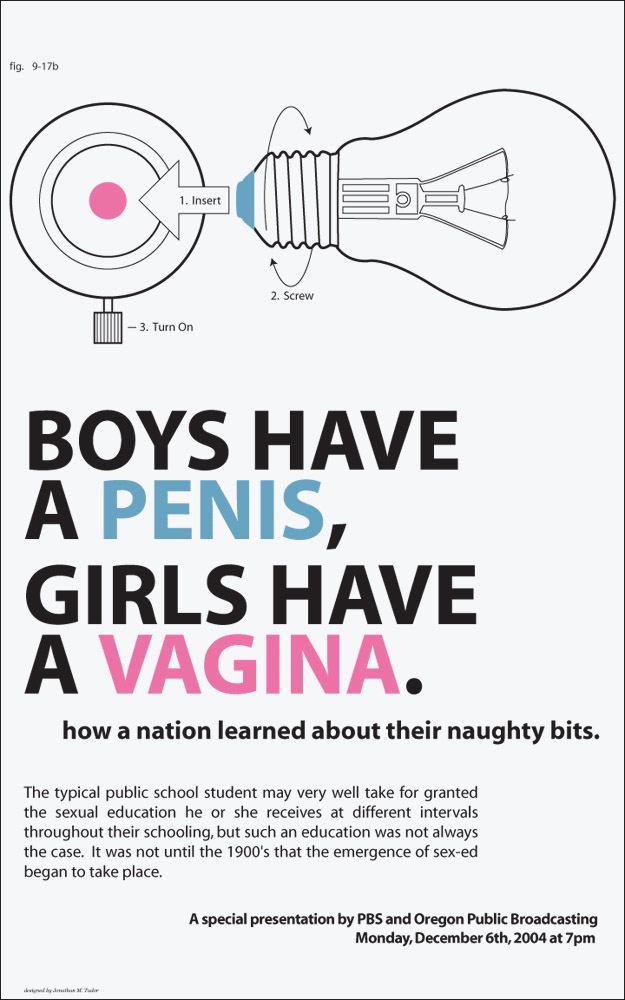
What did you learn in sex ed? Did you hear anything about LGBT identity? If there had been more representation of queer identities when I was in K-12, I can’t help but wonder how much earlier I could have begun coming to terms with my own sexuality. Today's discussion of sex ed reform is still severely lacking as relates to LGB and especially T issues.

As part of welfare reform, congress passed legislation in 1996 apportioning $50 million in federal funds for sexuality education programs. This could have been a progressive step, except the funding must be used for abstinence-only-until-marriage programs. Since they’ve passed this legislation, there has been substantial opposition to the use of federal funds on these faulty programs. People are increasingly aware of this problem, but when will we see progressive steps taken to reform sexuality education?

What Sex-Ed Reform Will We See?

Research continues to support the need for comprehensive sex ed. U.S.-based research organizations such as the Sexuality Information & Education Council of the United States (SIECUS) and Advocates For Youth describe comprehensive sex ed as addressing both abstinence and age appropriate contraceptive use. My issue with these organizations is that their focus is on reforms that address issues of unwanted pregnancy and STD/STI prevention, but fail to give needed focus to other important sexuality education issues.

Where do LGBT Issues Fit In?

Issues of unwanted pregnancy and STIs affect the majority, and have substantial effect on the well-being of our nation. But what about sexual minorities? Why are we being left out??? Because we are a minority, it seems far easier for sex ed reformers to soft peddle the need for LGBT inclusion in sexuality education. I'm not saying that our needs are being completely ignored. SIECUS works to provide support of LGB inclusion through research, educator resources, and policy reform resources. I really feel like this isn’t enough.

What Can We Do?

I have a friend who identifies as trans who grew up in an area very politically similar to my own, and they always come to mind when I’m thinking about sex ed reform. Where I grew up, the population was very homogenously white, Christian, hetero-normative, and very trans-unfriendly. As a gay male, I couldn’t imagine coming out in that environment, and the lack of support contributed to my not coming out until my early 20’s. I can’t imagine how much worse it would be coming out as trans in that area. There seemed to be absolutely no representation of who I was in the people around me, or in the sex ed curriculum covered in school. There was little to no awareness, only a lot of homo and trans phobia. These are prime examples of the isolation and marginalization that make this reform such a personal issue to me, and probably to many of you.

We can advocate for reform in sex ed just like we’d advocate for anything else. We can work at this on a local level, informing local K-12 educators. We can express our concerns to our political representatives, especially when we hear of upcoming, relevant legislation. As a political entity, we, the LGBTQIA... population are very organized on issues like marriage and domestic partner benefits, issues that more directly affect those of us with privilege and the power to advocate. It seems like we focus so much on these issues that other issues tend to lose our attention. My hope with this post is not only to raise awareness about the need for sex ed reform, but to raise awareness of the need for our community to advocate for issues that less directly impact us.